Explore what your topology can tell you
Trace a service across a network. Follow a packet through a fabric. Unfold the workloads behind an endpoint. Start with a question, then explore the diagram.
Guided Scenarios
Three small investigations, with live diagrams, things to try, and source files to keep.
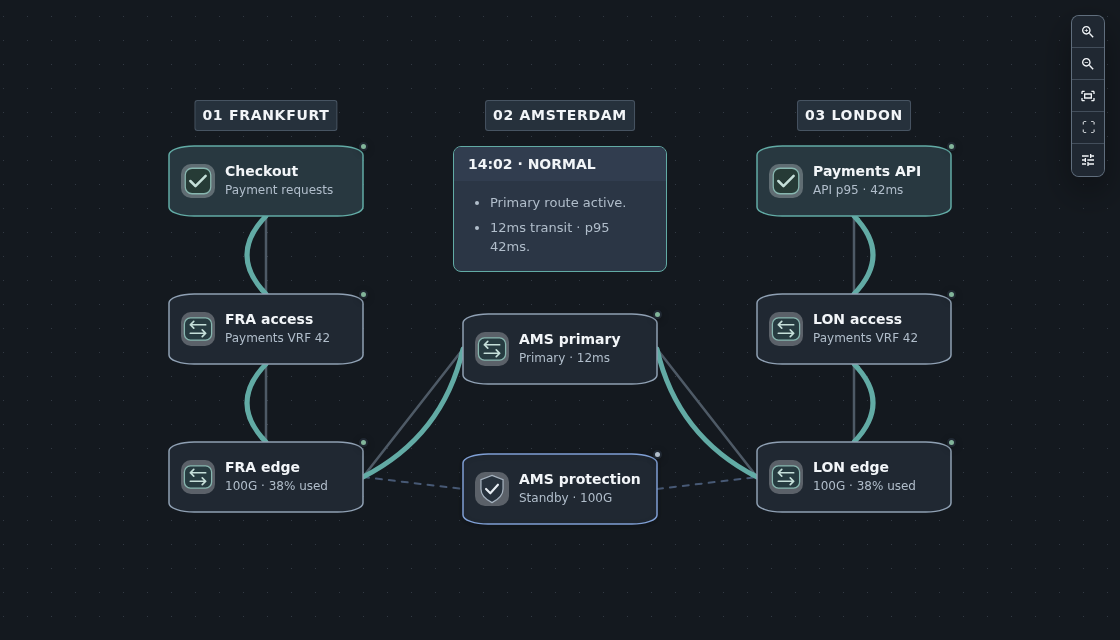
Payments across three metros
A fiber cut. One customer service. Follow the impact and compare the recovery route.
Trace the service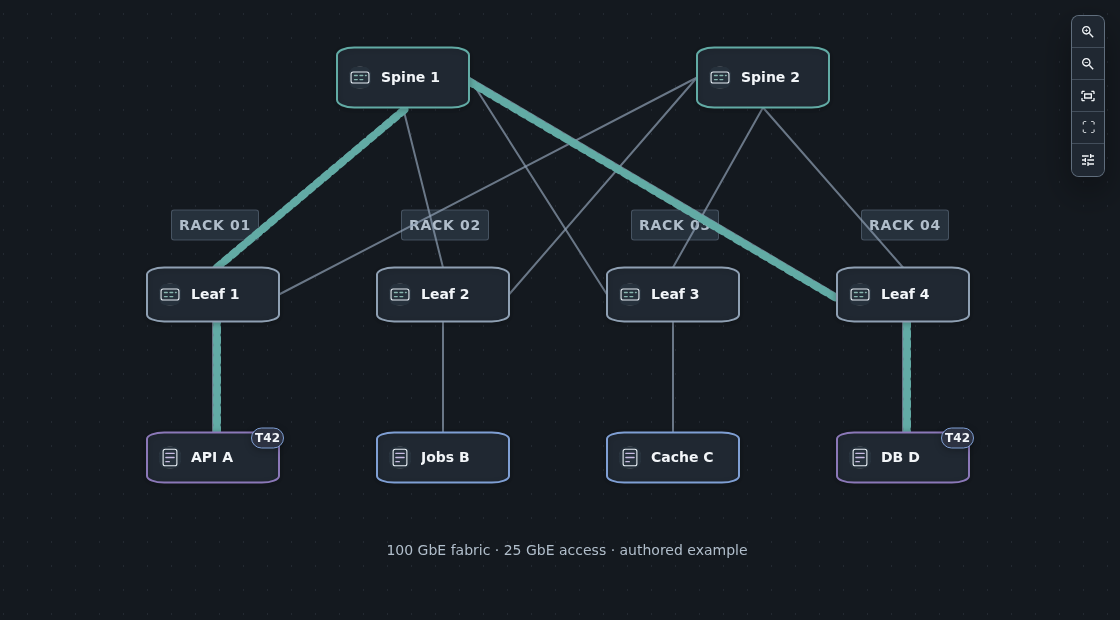
Follow a packet through the fabric
See the tenant journey inside a spine–leaf fabric, then reveal ports and traffic directions.
Follow the packet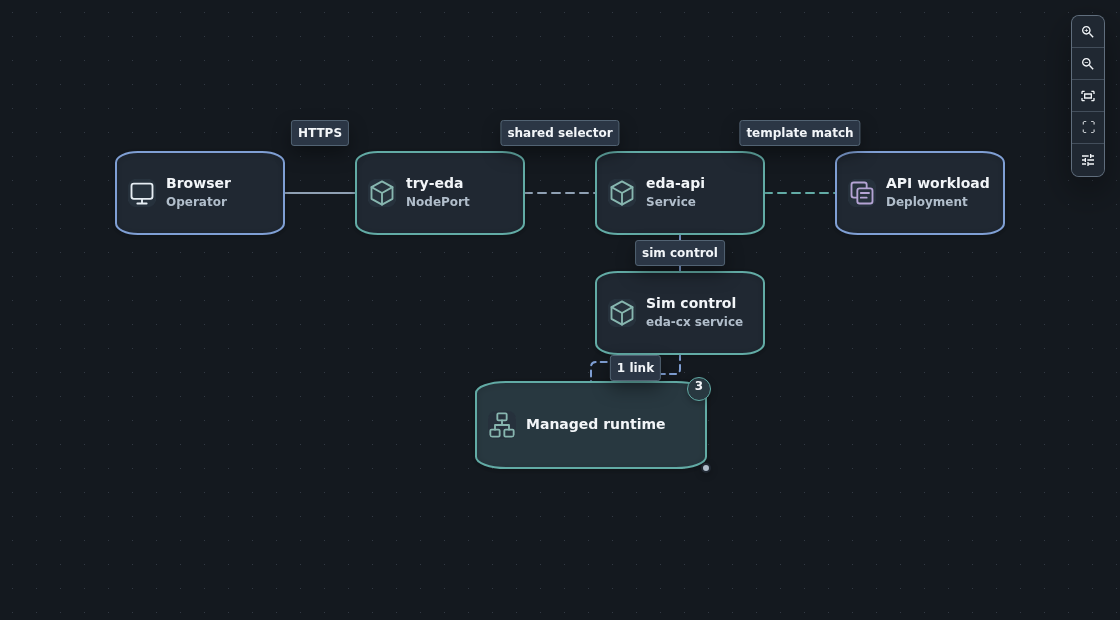
What sits behind this endpoint?
Start at the entry point. Unfold its workloads and discover the infrastructure they manage.
Explore the service mapThese are reproducible examples with authored states. Each walkthrough explains its data and assumptions. Download the YAML bundle or import its .tvstudio archive to make it your own.
Patterns To Borrow
Learn one visual technique, then bring it into your own diagram.
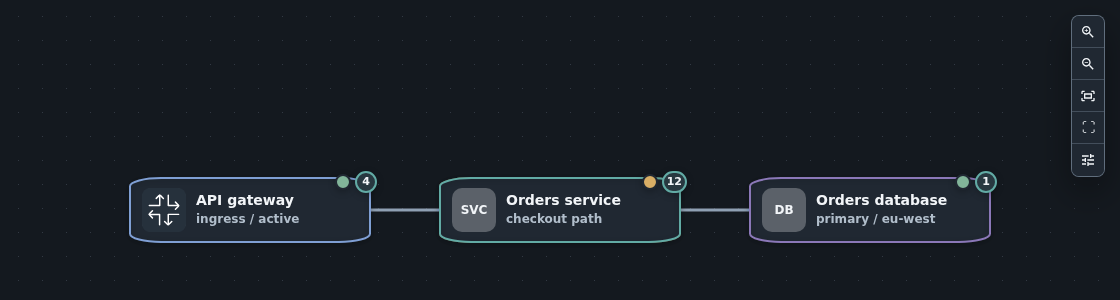
Service cards
Give names, roles, and status a clear place.
Open the pattern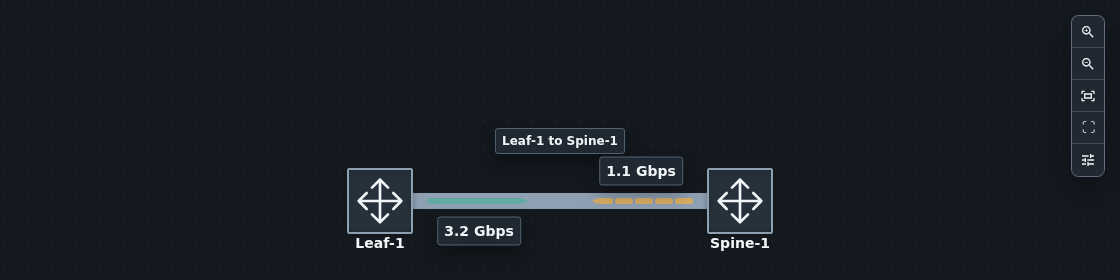
Two traffic directions
Read both directions on one physical link.
Open the pattern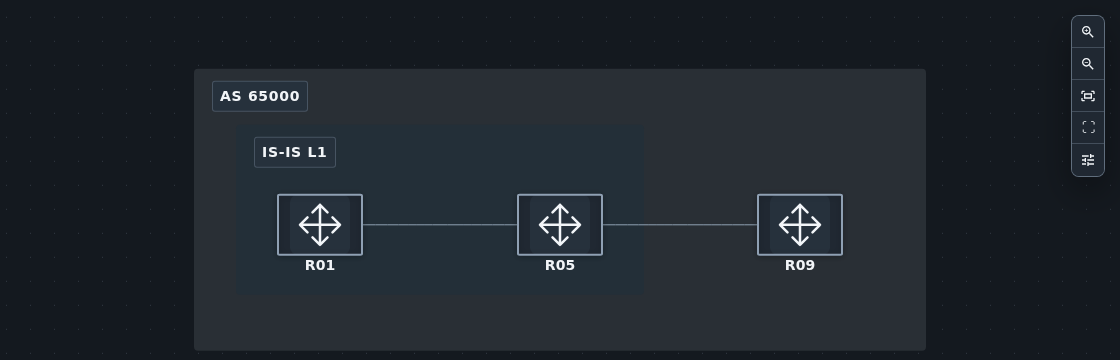
Regions within regions
Explain sites, domains, and shared membership.
Open the pattern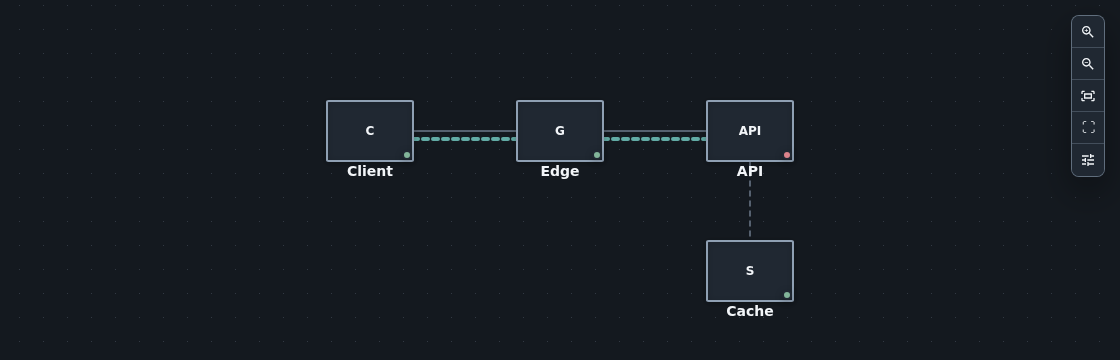
Focus and context
Follow one object without losing the network.
Open the pattern
Anchored explanations
Attach a short explanation to the right object.
Open the pattern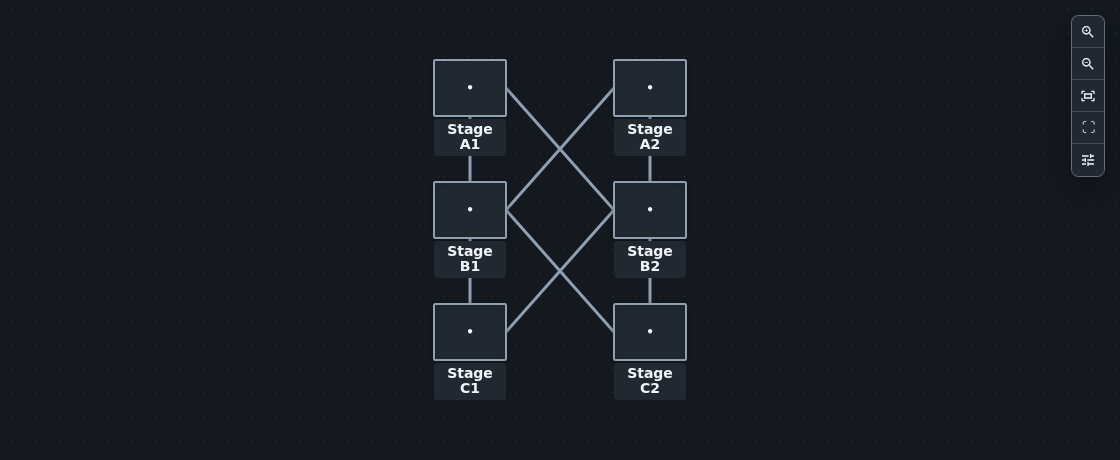
An orderly fabric
Arrange stages with a repeatable CLOS layout.
Open the patternFind A Specific Feature
The focused examples stay small so you can see exactly which source field changes the result.
| Build the model | Shape the view | Explain and inspect |
|---|---|---|
| Graph · Nodes | Edges · Paths | Attention · Regions |
| Authoring | Styling · Layout | Callouts · Shapes |
| Validate your files | Text | Object family lookup |
To embed a diagram in your own product or documentation, use the integration guides.